KERALA STATE COUNCIL FOR SCIENCE, TECHNOLOGY AND ENVIRONMENT

Green Kerala Initiative

In pursuit of the global One Trillion Trees Initiative launched by the World Economic Forum in 2020, the Kerala State Council for Science, Technology and Environment (KSCSTE) has initiated a programme aimed to promote the conservation and propagation of endangered tree species within the state. This initiative is being implemented through three of its premier R&D institutions—KSCSTE-Kerala Forest Research Institute, KSCSTE- Jawaharlal Nehru Tropical Botanic Garden and Research Institute, and KSCSTE- Malabar Botanical Garden and Institute for Plant Sciences. The primary objective of this initiative is to identify and propagate tree species listed in the IUCN Red List, with an emphasis on threatened endemic species of Peninsular India, particularly those native to Kerala. The project aims to produce sufficient numbers of these species for widespread planting across diverse landscapes, including forested and degraded lands, sacred groves, educational campuses, and public parks. Furthermore, a selection of economically important tree species has been identified for distribution among farmers and plantation sectors, thereby integrating conservation with livelihood enhancement. Through this comprehensive approach, KSCSTE seeks to contribute meaningfully to global reforestation efforts while simultaneously preserving Kerala’s rich and unique botanical heritage. Key Features Conservation of Rare, Endangered, and Threatened species(RET) Large-Scale Propagation of RET species Restoration of ecological balance Preservation of Kerala’s unique botanical heritage Contribute meaningfully to global reforestation goals Contact  Dr. P Harinarayanan Chief Scientist, Kerala State Council for Science Technology and Environment (KSCSTE) Sasthra Bhavan, Pattom Thiruvananthapuram 0471 2548299 hari.kscste@kerala.gov.in

Explore More
State Higher Research Centres of Excellence in Science Technology Applications (SHRESTA)

SHRESTA is envisaged for nurturing a few Centres of Excellence (CoE) from the State that produce world-class research in the areas of (i) Floods and Droughts (ii) Viral Research (Biotechnology) (iii) Nanotechnology (iv) Climate Change and (v) Robotics & Artificial Intelligence. SHRESTA aims to nurture the mature and nascent CoEs initially for two years and the potential Centres among them will be provided further support for next three years, attaining to a world class level. The Centre of Excellence (CoE) will be supported in phased manner with a grant of Rs. 200 lakh (maximum), over a period of 5 years. The proposed CoEs need to collaborate with National/ International Research Centres/ Universities/ Institutions.The selected Centres will be supported with financial grant to augment and strengthen the research capacity of the Centre including infrastructure at par with world class level in the stipulated areas with a multi-disciplinary and inter-institutional perspective. The overall aim of this programme is to develop Centres of Excellence in the State and facilitate pursuit of high-quality research and development of technologies through substantial investment in the Research Centres/Universities/Institutions and having proven track record and commitment to research. Procedure for Application Proposals will be invited through notification in the website of KSCSTE, once in a year, generally during July-August. The Proposals can be submitted through online only on notification and during the active time. Proposals submitted in any other mode will not be considered and summarily rejected. The Principal Investigator shall along with the proposal submit the Endorsement from the proposed Institution and Collaborating Institutions, Consent letter and necessary Certificates from Investigators, Resumes of PI and Co-I(s) highlighting the research achievements, etc. Features The Centres of Excellence (CoE) will be provided financial grant limiting to Rs.200 lakh which will be spread on a span of 5 years in 2 phases. The CoEs will be initially selected for Phase I support for 2 years with maximum financial grant up to 60 lakh. Based on their performance and deliverables achieved in Phase I, a subset of CoEs which show clear promise of becoming world-class Centre will be selected for Phase II support for 3 more years, with maximum financial grant up to 140 lakh. Selection of CoEs is done by the Programme Advisory Committee (PAC) after review of proposals by National level Subject Experts followed by critical evaluation by the PAC. The Head of the Institution will be in-charge of the CoE and responsible for the overall management of the Centre. The scheme encourages collaboration with National/ International Research Centres/ Universities/ Institutions. The Centers can get the privilege of collaborative research support from other Agencies by using this as matching grant. Eligibility Research Centres/R&D Institutions under Govt. of Kerala, Science/Engineering Departments of State Universities and Government Colleges in Kerala, having reputed standing and ranking and proven track record in research are eligible to apply under this scheme. Preference will be given to the R&D Centres of KSCSTE. The scheme encourages to collaborate with National/ International Research Centres/ Universities/ Institutions and the proposal shall include the details with the consent from such collaborating institutions. The Principal Investigator (PI) shall be the Head of the Institution/Centre/Dean in the case of University Departments, and he/she shall be a full time Faculty/Scientist having Doctoral Degree in Science/ Engineering. The PI shall have sufficient experience in administering and managing the Research Centres/Institutions, shall have carried out National/ International Research Projects and have at least 15 years of experience in carrying out Research activities/PG teaching. In case, the PI leaves the Institution due to unforeseen reasons, on transfer or superannuation or other reasons, the responsibility will be automatically transferred to the succeeding Head of the Institution until successful completion of the programme. There can be more than one Co-Investigator depending up on the multidisciplinary nature of the research, and the first Co-Investigator shall be from the same Institute or Department. The Co-Investigators (Co-Is) shall be full time Faculty/Scientist of the Centre/ University/ Institution with more than 3 years of service to retire. The first Co-Investigator shall have the same responsibility and accountability as that of the Principal Investigator. In case the first Co-I leaves the organisation before the successful completion of the programme, the Institute shall take up the responsibility to assign another suitable faculty as the first Co-I in consultation with KSCSTE, to continue with the programme until its successful completion. All the Co-Is shall have at least 3 years of experience in teaching/research activities. In the case of Centres carrying out multidisciplinary research, the collaboration of State/National/International level Centres is preferred. In such case, there can be more Co-Is for the project in the area of specialisation depending upon the interdisciplinary nature of the research area. The project team shall comprise of PI, Co-Is and Researcher Scholars. The Researchers may be registered full-time students for PhD or Post-Doctoral. Contact The Director KSCSTE Sasthra Bhavan, Pattom, Thiruvananthapuram Tel : 0471 2548200 –209 Email: mail.kscste@kerala.gov.in Scientist – in – Charge Dr. Siju C R Scientist KSCSTE, Sasthra Bhavan, Pattom, Thiruvananthapuram Tel: 0471–2548236 E-mail: sijucrkscste@gmail.com Downloads Guidelines Format for Quarterly Progress Report Terms and Conditions Format for Annual Progress Report Endorsement from Host Institution Format for Statement of Expenditure Certificate from the Investigators Format for Utilization Certificate Format for no pending SE & UC Request for Re-appropriation Date of Start Intimation Form Request for Extension Format for Project Completion Report Format for  Final Technical Report Format of Asset Transfer Certificate

Explore More
KFRI

Kerala Forest Research Institute (KFRI)

The Kerala Forest Research Institute (KFRI) is a multidisciplinary centre of excellence dedicated to research in tropical forests and forestry. Established in 1975, KFRI has now entered its 50th year of service. This remarkable jubilee milestone marks five decades of pioneering contributions to tropical forestry and biodiversity conservation. As we celebrate this golden jubilee, KFRI reaffirms its vision to be a Centre of Excellence in Tropical Forestry, offering scientific support for informed decision-making in conservation, sustainable utilisation, and the scientific management of natural resources. Facilities/Laboratories/Divisions Divisions & Departments KFRI has 17 research Departments grouped under 9 Programme Divisions as below in addition to special facilities such Research Monitoring and Evaluation Unit (RME-Unit) , Central Instrumentation Unit (CIU) and Kerala Forest Seed Centre (KFSC). Each Programme Division is headed by a Programme Coordinator (PC) and each Department by a Head of the Department (HOD). The Departments have specialized laboratories. Official website www.kfri.res.in Connect with us

Explore More
SRIBS

Srinivasa Ramanujan Institute for Basic Sciences (SRIBS)

The Srinivasa Ramanujan Institute for Basic Sciences (SRIBS), an institute of the Kerala State Council for Science, Technology and Environment (KSCSTE), Government of Kerala, is dedicated to advancing knowledge and fostering research in the fundamental sciences. Founded in 2012, inaugurated in 2013, and operational since February 2014, SRIBS has been actively engaged in promoting excellence across mathematics, physics, chemistry, biology, and computer science. The institute organizes colloquia, workshops, and conferences that bring together leading researchers, teachers, and students, creating a vibrant platform for scientific exchange. At present, a 10-acre campus is under development at Pampady, Kottayam, envisioned as a state-of-the-art facility to host research, training, and outreach activities. Among its landmark initiatives is the Kerala Supercomputing for Technological Advancement and Research (K-STAR) project, which aims to establish Kerala’s first supercomputing centre, supporting advanced modelling, simulation, and interdisciplinary research. Inspired by the mathematical genius Srinivasa Ramanujan, the institute seeks to nurture talent, build collaborations, and contribute to Kerala’s growth as a hub of scientific innovation. With a focus on both academic excellence and societal impact, SRIBS strives to make the fundamental sciences accessible, relevant, and impactful for future generations. Facilities/Laboratories/Divisions Chemistry, reaction dynamics, excited states, ML for molecular design. Biological Sciences – Protein structure, biomolecular simulations, computational drug discovery, ML for biological data. Physics – Biophysics, soft matter, nanoscience, computational materials, HPC and algorithm development. Mathematics & Computer Science – Fundamental mathematics, algorithms, AI/ML theory and applications, high-performance computing. K-STAR Supercomputing Facility – A flagship initiative (under development) to establish Kerala’s first state-level supercomputing centre for advanced modelling, simulation, and data-driven research. Workshops, Colloquium & Conference Series – Regular academic programs that act as platforms for research dissemination and training. Official website sribs.kerala.gov.in Connect with us

Explore More
Jawaharlal Nehru Tropical Botanic Garden and Research Institute

Jawaharlal Nehru Tropical Botanic Garden and Research Institute (JNTBGRI)

A large conservatory botanic garden and research institution established by the Government of Kerala which functions under the umbrella of the Kerala State Council for Science, Technology and Environment (KSCSTE). It was found on 17 November 1979 with the objective of providing conservation of tropical plant resources in the country in general and Kerala in particular. It also undertakes research activities for the sustainable utilization of the plant wealth of the country. The idea was conceived after the first United Nations Conference on Human Environment, held in Stockholm in 1972 with the committed efforts by late Professor A. Abraham, the Founder Director with help of Kew Botanic Gardens UK. The institute works on areas of Biotechnology, Bioinformatics, Conservation Biology, Ethnomedicine, Ethnopharmacology, Garden Management, Microbiology, Phytochemistry, Phytopharmacology, Phytochemical Nanotechnology, Plant genetic resources, Plant Systematics and Evolutionary Science. It has state of art facilities of commercial plant tissue culture, in silico drug design, herbarium, drug testing on animal models, seed bank, pollen bank, mushroom biology, field gene banks, species conservatories. The institute supports students, interns, and research scholars in plant science and biomedical sciences. Facilities/Laboratories/Divisions Central Instrumentation Facility offers analytical services on affordable charge. Official website www.jntbgri.res.in Connect with us  

Explore More
CWRDM

Centre for Water Resources Development and Management (CWRDM)

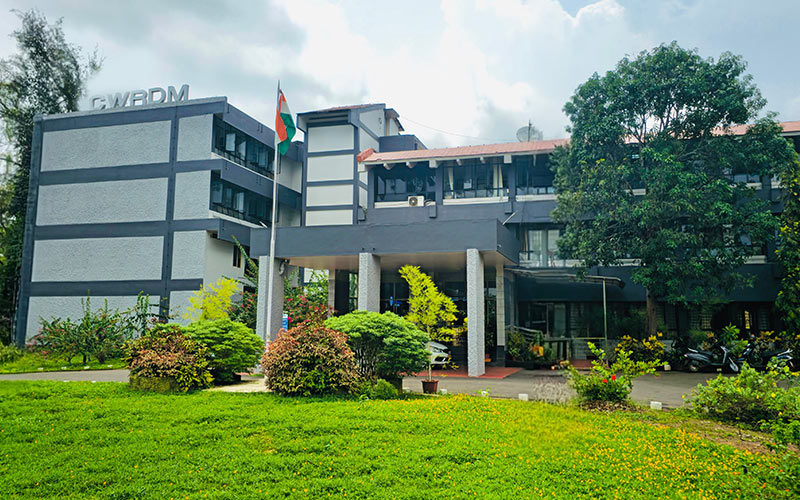
CWRDM is a premier R & D institution in the water sector established by the Government of Kerala. Recognising the need for catering to the R & D needs in the field of water management, the Centre for Water Resources Development and Management (CWRDM) was established as an autonomous research organisation by the Government of Kerala, under its Science and Technology Policy in February 1978. The Centre was amalgamated with the Kerala State Council for Science, Technology and Environment (KSCSTE) in its Silver Jubilee Year-2003. CWRDM has substantially contributed to the scientific hydrologic studies and water management in the region. Starting with the establishment of data management system for the region, CWRDM has tackled different problems pertaining to watershed development, wetland management, water management for agriculture, forest and urban hydrology, estuarine management, groundwater development, water quality management, water related environmental issues, irrigation and drainage issues, etc. About 500 projects have been completed and more than 2000 scientific papers and 1500 research reports have been brought out. The institution regularly conducts several training courses to address the needs of Government Departments, NGOs, Local Bodies, etc. Dr. Manoj P. Samuel, is the present Executive Director of the centre. Facilities/Laboratories/Divisions CWRDM has four Research Groups. 1. Hydrology and Climatology 2. Ecology and Environment 3. Land and Water Management 4. Training and Outreach. It has four subcentres 1. Trivandrum 2. Kottayam 3. Manimalakunnu Laboratory Water Quality Analysis Lab, Soil Lab, Biotechnology Lab, Biochemistry Lab, Geotechnical Lab, Hydrogeology Lab, Isotope Hydrology lab, Hydrological Instrumentation Lab, Geomatics Lab etc. Facilities: Central Instrumentation facility, Construction and maintenance facility, Information System Facility, Isotope facility, Water Resources Museum, Library and Documentation Facility etc. Administration and Finance Wing headed by the Registrar deals with the administrative and financial matters of the Centre. Official website www.cwrdm.kerala.gov.in Connect with us

Explore More
ICCS

Institute for Climate Change Studies (ICCS)

ICCS was established in 2014, and in recognition of its expanding role in scientific research and state-level planning, it was brought under the Kerala State Council for Science, Technology and Environment, Department of Science & Technology, Government of Kerala, in 2019 as a Research and Development Institution. Headquartered at Kottayam, ICCS is the first dedicated institute in the state focusing exclusively on climate change research, adaptation, and policy support. The mandate of ICCS is to undertake state-specific research on climate change impacts across sectors and ecological zones of Kerala and to propose strategies for management and adaptation. ICCS contributes to impact studies, vulnerability assessments, and the integration of adaptation strategies into developmental planning in Kerala. ICCS has implemented, and continues to implement, several externally funded projects supported by DST, SERB, MoES, DRDO, and the World Bank. Beyond research, ICCS plays an active role in capacity building and public engagement through awareness programmes, training workshops, and exhibitions. Today, ICCS is widely recognized as a premier state-level institution in climate science and policy support, dedicated to advancing science-based solutions for sustainable development and climate resilience in Kerala. Facilities/Laboratories/Divisions Divisions: Weather & Climate Modelling; Coastal & Ocean Modelling; Hydrologic & Hydraulic Modelling; Agrometeorology Remote Sensing & GIS Applications; Climate Change Impact, Mitigation, and Adaptation Official website https://iccs.res.in Connect with us  

Explore More
Natpac

National Transportation Planning & Research Centre (NATPAC)

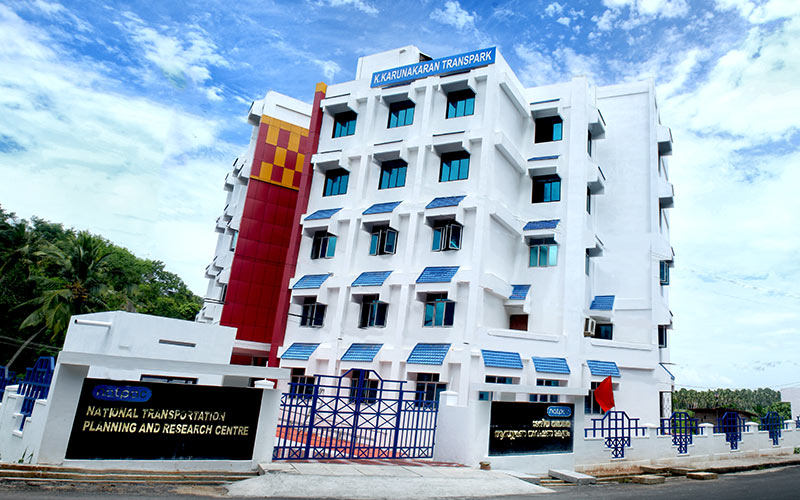
KSCSTE – National Transportation Planning and Research Centre (NATPAC) was established by the Government of Kerala in 1976 to develop solutions to the traffic and transportation problems faced by the State. Owing to the contributions and achievements made by the institute, NATPAC was reconstituted as an autonomous R&D Centre under the Department of Science and Technology, Government of Kerala. In November 2002, NATPAC was amalgamated with Kerala State Council for Science, Technology and Environment (KSCSTE), an autonomous body under the Department of Science and Technology, Government of Kerala, which was formed with the objective of adopting an integrated approach to the research and development activities in Kerala. The Centre undertakes research and consultancy works in the field of transportation planning, traffic engineering, highway and pavement engineering, road safety, rural roads, inland water transport, tourism planning, transport economics and management, intelligent transportation systems, transport energy and environment, geomatics and other transportation-related aspects. Facilities/Laboratories/Divisions The following are the Scientific Divisions of NATPAC – 1. Transportation Planning Division 2. Traffic Engineering & Safety Division 3. Highway Engineering Division 4. Water Transport Division (including GIS) Official website www.natpac.kerala.gov.in Connect with us

Explore More
mbgips

Malabar Botanical Garden & Institute for Plant Sciences (MBGIPS)

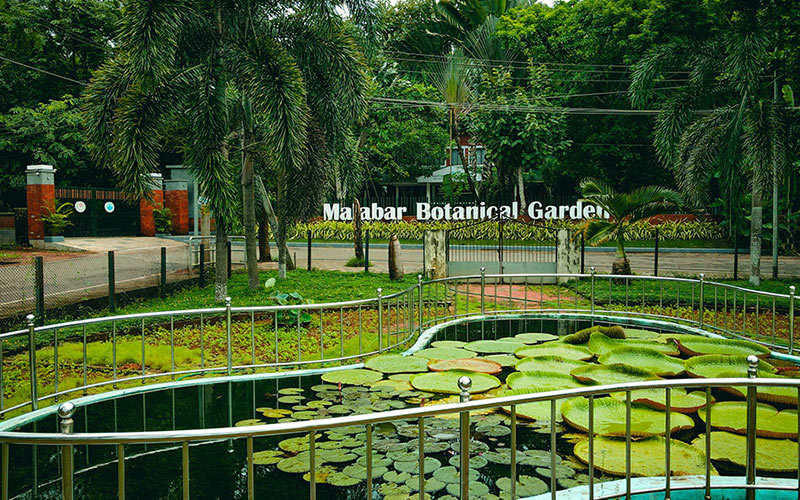
KSCSTE-Malabar Botanical Garden & Institute for Plant Sciences (KSCSTE-MBGIPS) is an institution of the Government of Kerala, administered by the Kerala State Council for Science Technology and Environment (KSCSTE), dedicated to the conservation and research on aquatic plant diversity, lower group plants, endangered plants of the erstwhile Malabar Region, as well as disseminating knowledge on various facets of plant sciences. By virtue of possessing a vast morass land, the Malabar Botanical Garden and Institute for Plant Sciences becomes unique in the nation ideal for ex situ conservation of aquatic/wetland plants and for undertaking research on them. The educational value of the Garden lies with the descriptive labels displayed for the different sections and plants. Facilities/Laboratories/Divisions Biodiversity, Floristics and Systematics Plant Genetic Resources, Conservation, Horticulture and Population Biology Ecology Restoration and Monitoring Plant Biotechnology and Molecular Systematics Education, Outreach and Capacity Building programmes : Academic Attachment Programmes, Project guidance, Herbarium consultation, Start up incubation facilities. Official website https://mbgips.in/ Connect with us

Explore More